The Erattakulangara Devi Temple in Pallipadu, Alappuzha, Kerala, holds a fascinating legend of discovery.
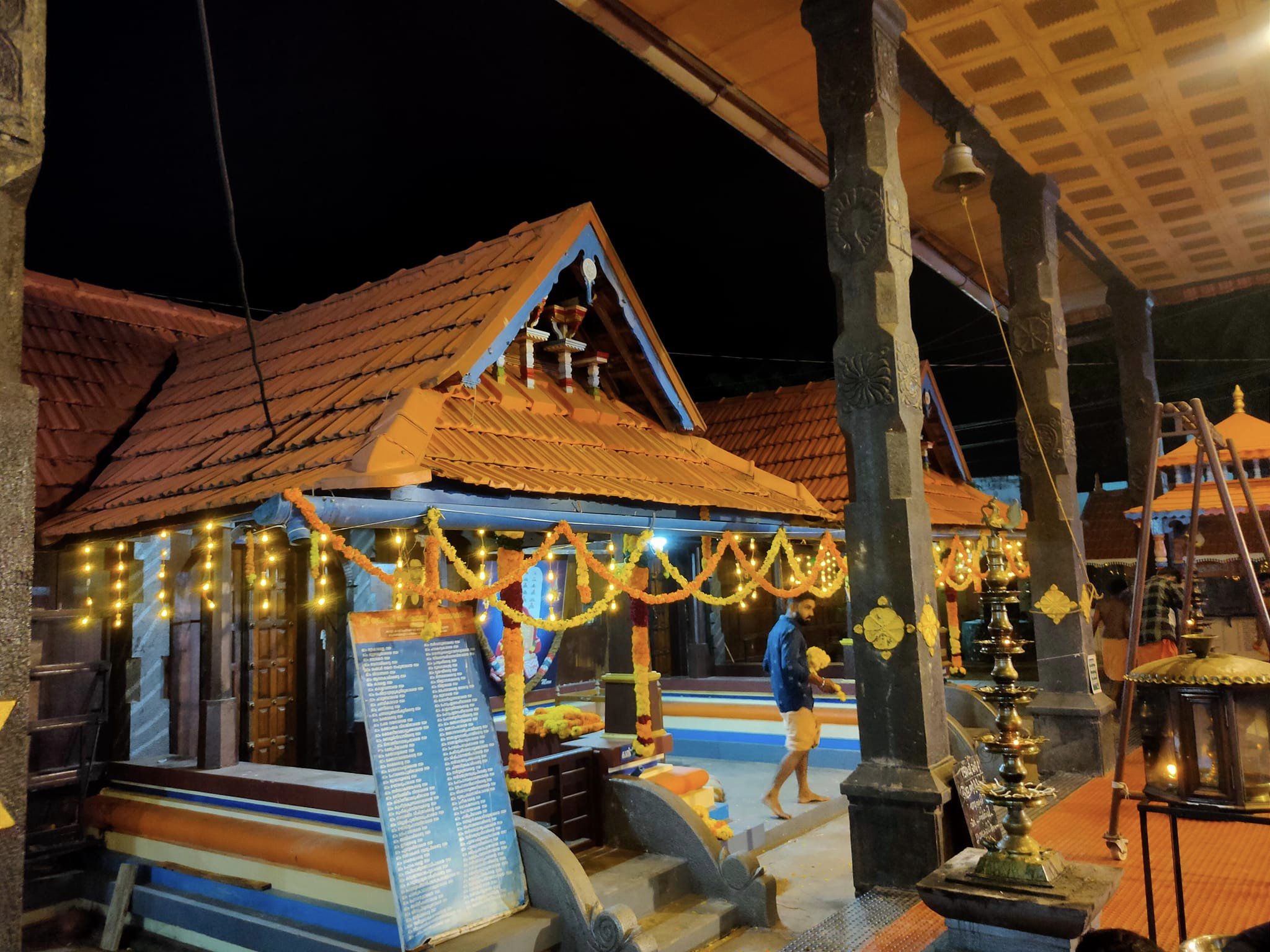
According to local folklore, a farmer lady sharpening her bow-shaped knife on a stone near Punja Kandam witnessed blood oozing from the stone, prompting her to report the unusual occurrence to the prominent Brahmin family, Kochoor Madam. Subsequently, the highest priest investigated the site and discovered the idol of Sree Bhuvaneswary. This idol was then consecrated priestly near the old Shasta temple, originally consecrated by Parasurama. The area where the idol was found is now known as Valiya Manakkattu Kaavu, honoring Sree Ponnu Manakkattamma.
Festivals
Parayeduppu
During the Parayeduppu festival season in the temples of Onattukara, festivities kick off with the procession of the deity, Devi, from Manakkattu Devi temple on the Bharani star of the Malayalam month Makaram. A central element of Parayeduppu is the Jeevatha, fashioned after the temple's own structure. The rhythmic progression of Jeevatha Ezunnallathu (procession) is particularly notable, starting with slow beats and gradually escalating to a crescendo of fast beats.
Aarattu
Arattu is observed during the final week of the month of Vruschika, commencing on the 24th of Vrischikam and concluding on the 1st of Dhanu. On the seventh day, known as Kodiyeram, Manakattamma proceeds to Sri Arayakulangara Sri Krishna Swamy temple's pool, where she raises the flag before returning. While in the past the rituals were conducted by the Brahmins of the Kochur Math, they are now performed by the Tantri of the Thazhaman Math, who holds the thanthra of the Manakattu Devi Temple.
Contact Information
- Address:Erattakulangara Devi Temple, Pallippad, Alappuzha
- Phone Number: 62384 55053